• Skip to main content
  • Skip to header right navigation
  • Skip to site footer

Scandal Shack

👅🍑🍒 Star â­đŸ˜ˆâ€ïž Scandals 🍆🍌💩

    • Search
  • Celeb
  • Plot
    • Slide
  • ⭐ Star
    • Latest
    • Update
  • 💩 Scoop
  • Slut
  • Babe
  • Doll
  • đŸ˜» Thot
    • Live
    • Show
  • Contact
    • DMCA
    • Donate


    • Search
  • Celeb
  • Plot
    • Slide
  • ⭐ Star
    • Latest
    • Update
  • 💩 Scoop
  • Slut
  • Babe
  • Doll
  • đŸ˜» Thot
    • Live
    • Show
  • Contact
    • DMCA
    • Donate


Jean-Francois Carly: Surrender After

JEAN-FRANÇOIS CARLY: SURRENDER AFTER

photography Jean-François Carly
Rebecca

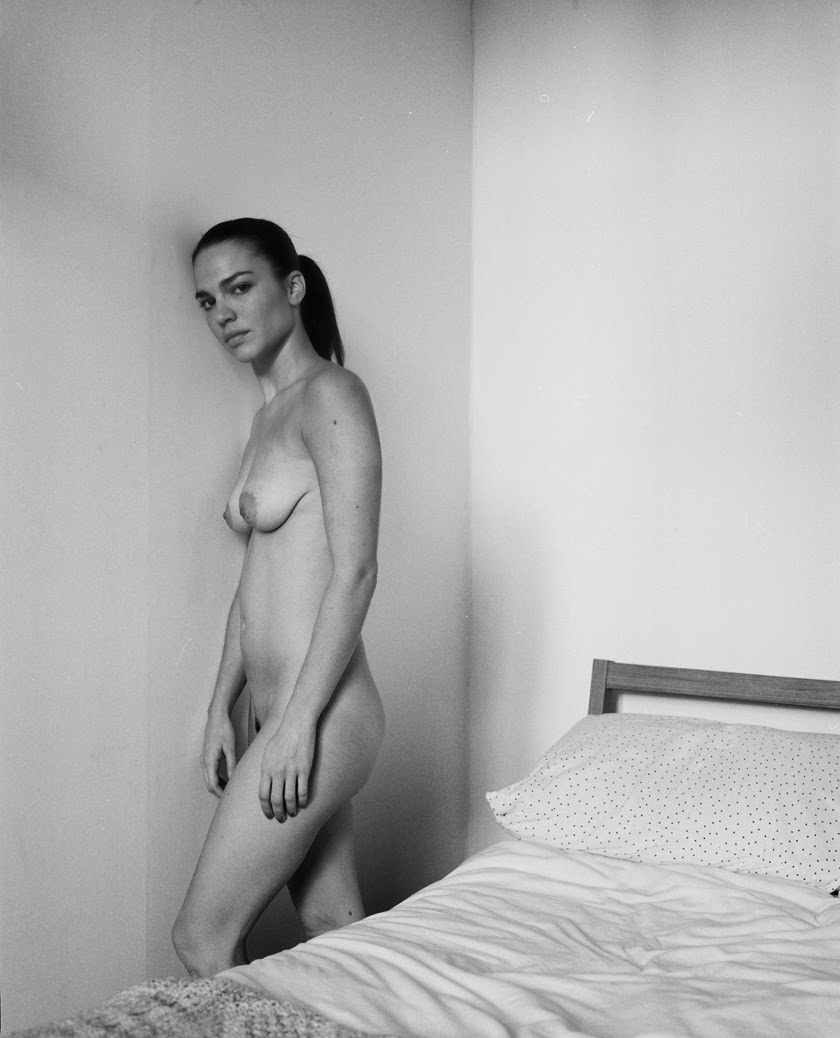
Shot on medium format using only natural light, Jean-François Carly’s new series, Surrender After, comprises fifty striking black and white portraits of individuals at home, on their beds, in the nude. It’s a unique, very personal project: each subject featured is an acquaintance or friend of the prominent fashion photographer, who he met at a social event or party, usually in London’s East End.
While Carly is best known for his fashion photography (with his work having appeared in numerous publications and top fashion titles such as GQ, Visionaire, and Fashion Now), he started shooting this intimate portrait series four years ago, exhibiting the first half in Paris, before deciding to shoot a second part, made up of 25 more portraits, last year.

“30 jours 30 femmes”


From today, the series is on show at Shoreditch’s Forge & Co, where viewers are invited to peruse the entire collection of 50 portraits. Ahead of attending the launch last night, we caught up with Jean-François to find out more.

Kathryn

How did the experiencing of shooting people you had met in social situations compare to working with someone you know professionally?

Most of them had never been photographed professionally, especially naked, so for them, there was this fragile mood around it. But [once] they had accepted [being nude], they felt more confident and, at the same time, they trusted me. If I noticed that they were uncomfortable, I would leave the room: I’d set up my camera and set up the frame, and tell them where to be. Undressing was this delicate moment, which sometimes was a bit awkward, however when they were naked, it was OK. It was strange, after [undressing] they were usually more confident. Some wanted to hide their body a bit more, be camouflaged, others didn’t care. [The series] is never shocking.
Did you still work in a similar way to how you would on a fashion shoot?
I didn’t direct too much, I wanted more natural poses, unless [their pose] was a bit of an awkward shape, [whereas] in fashion, I direct more. Very quickly I’d shoot one or two rolls, which is like 10-20 frames. I would also take a Polaroid before. It usually took five, six, seven minutes maximum before [the subject] would start to become a little self-conscious or start posing too much or questioning the pose. I would try to keep the essence of the first click, because sometimes even the Polaroid has something a bit magical, a bit natural, the more pictures you take, the [more the] person starts to move differently or start to concentrate too much.
Do you feel this is one of the more personal projects you’ve done?
Yes I think so. Three or four years ago, I first showed it in Paris. And then about six or seven months ago I decided I wanted to do more, and had the opportunity at the Forge (Forge & Co) to do this. And as it’s a bigger space, I thought: “OK let’s do it again.” I really enjoyed doing it. It was always like a social experience, meeting people and sharing something.

Natasha

What was the shooting process? And why did you decide to photograph people at home in their beds?

I started doing the second part in October/November so it would start to get dark very quickly, so I would have to go during the day to make sure I got the natural light. I wanted to use natural light, no flash. People were often only available on weekends, and of course if they went out on a Friday, and then you’re coming at 8am, often they’d cancel. I’d come in, they’d usually offer me a cup of tea and then we’d chat. And then I set up my equipment, which was quite heavy. The whole session would just take five or six minutes.
The bedroom is the safest place in your flat or house. It’s where you be yourself and relax. I think the bed is like this mother/womb; you’re like a foetus when you relax in it. You can do everything in your bed, apart from maybe go to the bathroom. It’s a relaxed place where people who aren’t used to being naked in front of people, they feel more comfortable. Sometimes you see a bit of duvet and/or a white wall [in the images], which is like a very blank canvas.
Did people leave their rooms in a natural state?
Yes, even in one of the pictures you see a mobile phone, and though it was distracting, I said: “Let’s keep it, I don’t care”. I didn’t want to start doing set design, and changing things. I wanted to keep it as it is, whether it was messy or not. It was over in a flash, there wasn’t time to say, “OK let’s move this, let’s move that.”

Why did you choose to shoot on film for this project?
I started as a photographer 15 years ago shooting on film and I think film, in a way, for this project in particular, is more intimate. If I do one roll, ten exposures, when I click it’s because I see something, if it’s digital I will do click click click click, and then I will choose later. You’re not as bothered about whether you have it, because you’re sure you have it if you’ve shot like 200 pictures. I wanted to not have this reflex, because that’s not how I work anyway. Even in digital I shoot almost like I’m shooting on film; when I click it’s because there’s an emotion between my brain, eye, the camera and my heart, and then I click. I think this contact is more respectful and more human. It’s more human than if you take lots of pictures. The black and white, the grain, it makes it more touchable and human and approachable and sensitive.
What atmosphere/emotion does the series evoke? How do you want the images to be viewed?
I think there is a peaceful mood, [the series] is quite relaxing. It’s a homage to people, humans, nature, the body. When naked you can really try to capture more of [the subject’s] personality. They just need to show their face and their attitude. No clothes. Nothing artificial. That’s why black and white was important, it’s less distracting. You see the eyes and the face, the whole thing. If [the images] were in colour and there was a little lipstick, or something in the background, like a poster in a different colour, maybe your eye will be unconsciously directed to that first, and not the subject, which is the person. Black and white is a bit more classic, and for this project, more intimate. More real. It fit the series more than doing it in colour; colour’s a bit more crude, too flashy maybe.

How did your love for photography begin?
I did two years of medicine at University in Belgium in Brussels, and then I quit because I realised it wasn’t really my thing. And then I did a qualification in Visual Communication, but still no photography. Then after I graduated I went a year later to London to do some work experience in Harvey Nichols in the press and communications department. I already had a small portfolio of grainy, black and white, backstage photography, so in London I started to send this portfolio out to a few people, and I was given an opportunity to take a big portrait in black and white. They put it in all of the windows of Selfridges on Oxford Street. That was back in 2001/2002. It started very organically, I never expected to be a photographer. So not something you dreamed of ever doing when you were living in Belgium?
No, no. I think, during the second year of [studying] Visual Communication, I had a mini course of photography and we had to create a story illustrated through images. I’ve always loved photography, I received my first camera when I was six years old, a little plastic camera from my Grandmother. I was annoying people [when we were] on holiday, because they always had to wait because I would take pictures. It was a hobby, I never thought I could do it professionally. So it just came very organically, and slowly, a bit later.

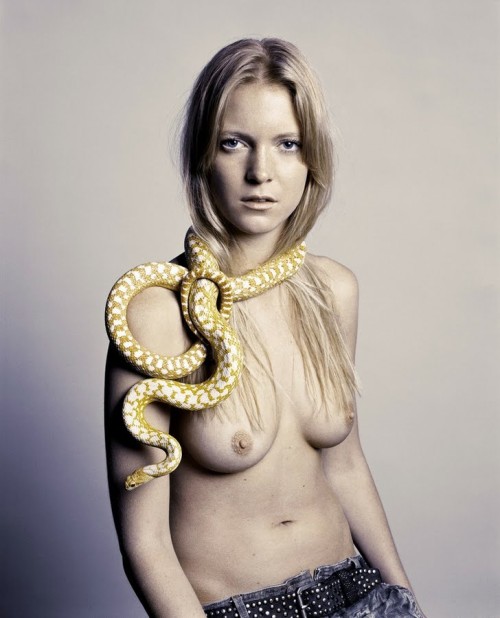
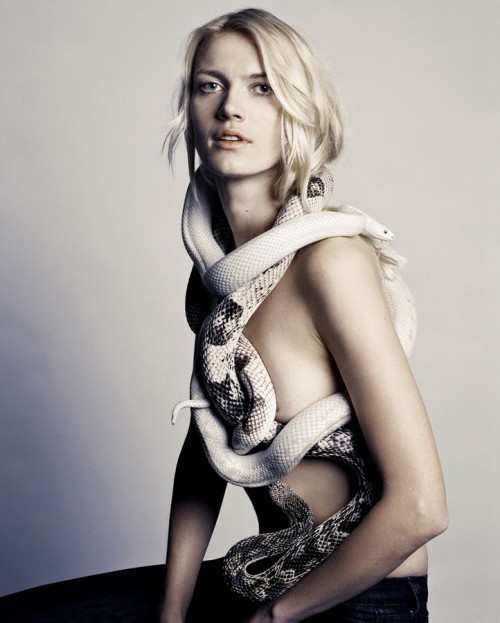
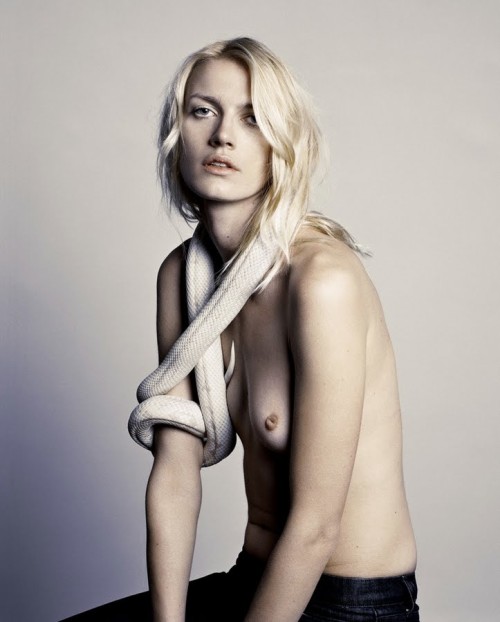
Snakes by Jean-Francois Carly


📂 Scoop


Previous Post:Sasha Alexander’s very first nude scene in Shameless
Next Post:Online Schoolgirls Porn Removed After Exposed By School Journalist


  • ⭐ Star
  • Scoop
  • đŸ˜» Thot